


Meet the Team: Anthony DiLuzio, Associate Director – Public Safety Specialist
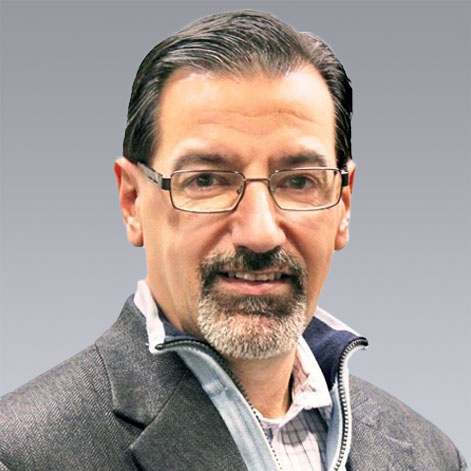 Meet Anthony (Tony) DiLuzio, Associate Director at Colliers Project Leaders and the firm’s leading expert in public safety facilities. With more than 30 years of experience providing project management services, overseeing design and engineering professionals, preparing construction documents, and coordinating engineering disciplines, Tony has led over 20 public safety projects, from stand-alone fire and police stations to large-scale combined public safety facilities. Active projects are currently underway in Maine, Massachusetts, Connecticut, and Rhode Island, with that reach now expanding into North Carolina in collaboration with regional colleagues.
Tony’s background is uniquely well-rounded. Earlier in his career he served as Vice President of Architecture and Engineering at McGuire Group, where he led the design and production of public safety facilities from the ground up, giving him an insider’s command of both the design and owner’s representation sides of the table.
What sets Tony apart is a genuine, career-long commitment to the people behind the badge. He was drawn to public safety early on after witnessing the deep gratitude of a small police department moving out of a small town hall basement into a purpose-built station — a moment that shaped everything that followed. “That’s the special sauce,” he says of the trust he builds with fire chiefs and police chiefs who have spent decades in aging facilities, hoping to leave something better for the next generation.
Tony approaches every project with a straightforward philosophy, communicating clearly, acting with fairness, and balancing cost, schedule, and quality at every step. He also brings something competitors rarely can — a national vantage point. Having managed public safety projects from Maine to Tampa, Tony is able to draw on regional differences in everything from firefighter decontamination protocols to station technology standards, helping local clients think beyond how their operations function today and toward how they can serve their communities for decades to come.